Bright & shiny wire
Clean, bare, uncoated copper wire, free of insulation, tinning and attachments. Wire size and condition affect the assessment.

From bright stripped wire to old plumbing. We’ll help identify your copper and explain the grade.
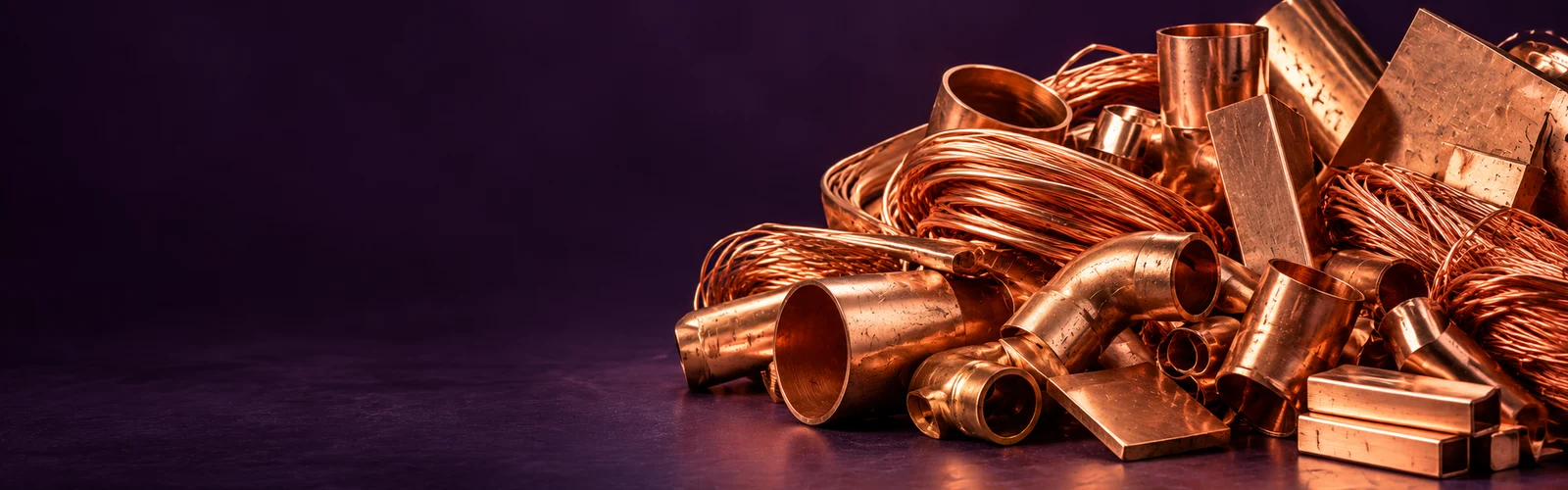
Copper is valued for its conductivity, durability and workability. You’ll find it in electrical wiring, plumbing, roofing, motors and everyday fittings. Colour is a clue, but coatings and plating can hide the material underneath.
Use these examples as a guide. The team confirms the material and grade at the yard.
Clean, bare, uncoated copper wire, free of insulation, tinning and attachments. Wire size and condition affect the assessment.
Clean copper pipe, tube, busbar and solids without paint, solder or fittings.
Copper with solder, paint, enamel or similar contamination, assessed separately from clean copper.
Plumbing copper with brass fittings, chrome-plated fittings or small attachments still in place.
Copper still covered in insulation. The amount of recoverable copper and cable construction determine the grade.
Ask us which preparation is worth your time.
More preparation tipsKeep bare wire, clean pipe, soldered copper and insulated cable separate.
Remove easy attachments where practical. Ask before spending hours stripping cable.
Only handle cable that is confirmed disconnected and safe. Never burn insulation.
Colour and outside diameter do not determine the grade. Recoverable copper, insulation, fillers, armour and attachments all matter.
More copper relative to insulation and other material.
Keep similar cable types together for a clearer assessment.
Ask about recovery-based pricing for suitable loads of the same cable type. Processing considerations affect the final rate.
No. Tinning, coatings, oxidation, fine strands and attachments can move the material into another grade. The team will explain the assessment.
No. We assess insulated cable as it is. The extra return from stripping needs to be weighed against your time, tools and reduced material weight.
Yes. It may be assessed as domestic copper rather than clean copper. Ask whether separating the fittings is worthwhile.
You don’t need to know every grade. Tell us about your material and we’ll help you work out the next step.