Nickel-based alloys
Specialist nickel-alloy scrap, including material identified as Inconel, assessed by composition.

Specialist material needs a closer look. Share alloy markings and origin information so we can discuss a suitable assessment.
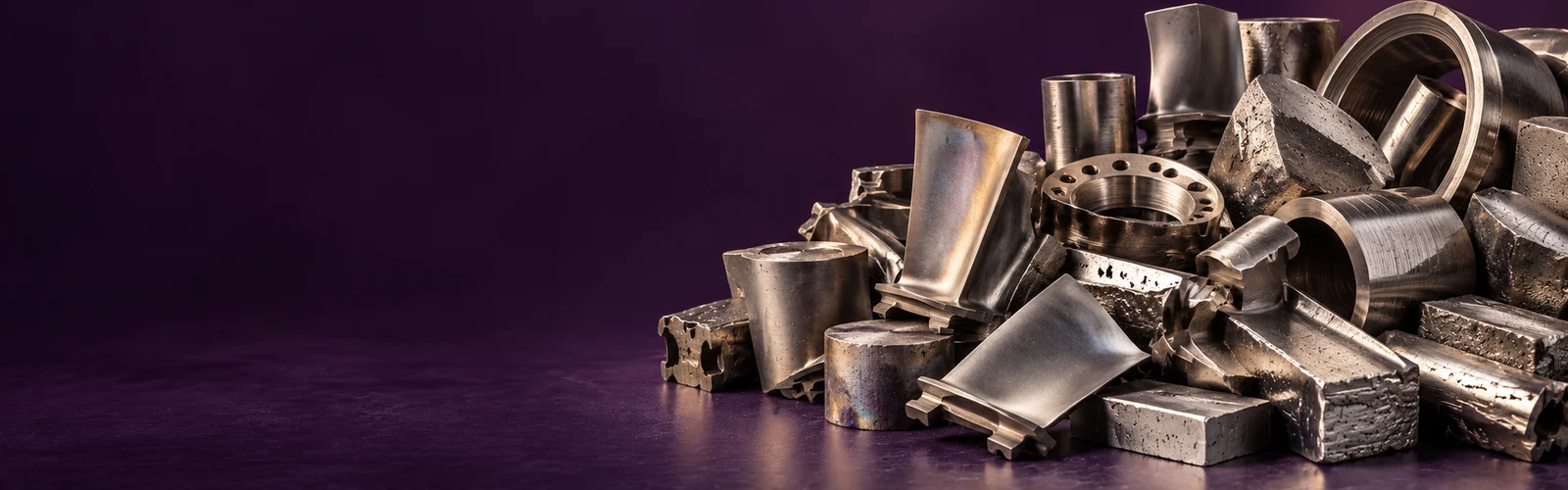
High-temperature and specialist alloys appear in demanding industrial applications. Composition matters more than appearance; material identification and documentation help establish the next step.
Use these examples as a guide. The team confirms the material and grade at the yard.
Specialist nickel-alloy scrap, including material identified as Inconel, assessed by composition.
Titanium scrap and production offcuts requiring identification.
Unknown or mixed alloy material needs a specific assessment.
Ask us which preparation is worth your time.
More preparation tipsKeep different known alloys separate.
Retain grade markings, specifications and origin information.
Send photos and quantity estimates before bringing in specialist material.
Contact the team with photos, markings and the original use. We’ll discuss the assessment needed before confirming acceptance or price.
Keep known alloys separate. Mixing material can make identification and grading harder.
You don’t need to know every grade. Tell us about your material and we’ll help you work out the next step.